Livestock Tracking and Health
Okay, this one’s a bit different. Here the SBC might sit on a gate or a feeding station, reading RFID tags and monitoring water trough levels. Dust and mud are the enemies. A sealed, fanless board just shrugs it off.
Choosing the Right Board: A Quick Comparison
Not all ruggedized SBCs are created equal. Here’s a rough look at what’s out there. (Prices are ballpark, because, well, supply chains.)
| Board Type | Temp Range | Typical Use | Price Range |
|---|---|---|---|
| Standard Raspberry Pi | 0°C to 50°C | Prototyping only | $35–$75 |
| Industrial SBC (e.g., BeagleBone Industrial) | -40°C to 85°C | Sensor hubs | $100–$200 |
| Ruggedized ARM SBC with enclosure | -40°C to 85°C | Remote weather stations | $200–$400 |
| Custom carrier board + SOM | Varies (often -40°C to 85°C) | High-volume deployments | $150–$500+ |
That said, the sweet spot for most farm pilots is the $150–$250 range. You get solid protection without going full aerospace-grade.
The Power Problem (and How Rugged SBCs Solve It)
Here’s a pain point nobody talks about enough: power. Fields don’t have outlets. You’re running on solar, battery, or both. A standard SBC might guzzle 5 watts and brown out when a cloud passes over. A ruggedized board often idles under 1 watt and handles voltage sags without rebooting.
Some even have built-in MPPT (maximum power point tracking) controllers. That’s a fancy way of saying they squeeze every drop from your solar panel. In fact, for remote monitoring, power efficiency is just as important as physical toughness.
Connectivity: The Weak Link
You can have the toughest board on earth, but if it can’t send data, it’s a paperweight. Rural connectivity is… well, let’s just say it’s improving. Slowly.
Rugged SBCs typically support:
- LoRaWAN (long range, low power — great for sensor networks)
- NB-IoT and LTE-M (cellular for wider coverage)
- Wi-Fi HaLow (newer, longer range than standard Wi-Fi)
- Satellite backhaul (expensive but works anywhere)
The trick is having a board with multiple options. Because what works on one farm might be useless on the next. And you don’t want to swap hardware every time you cross a county line.
Installation and Maintenance Realities
Let’s be honest — nobody wants to drive two hours to reboot a frozen computer. Ruggedized SBCs help here with watchdog timers (auto-restart on lockup) and remote management tools. But installation still matters.
A few hard-won tips:
- Mount enclosures with a slight downward angle so water runs off
- Use drip loops on cables — water follows gravity, not your hopes
- Add desiccant packs inside the enclosure to fight condensation
- Label every port. Future you will be grateful.
And sure, you could skip all this. But then you’ll be the person explaining to your boss why the irrigation system flooded a field because a $2 connector corroded.
The Bottom Line for Growers and Agtech Builders
Ruggedized single-board computers aren’t glamorous. They don’t get keynote speeches. But they’re the unsung heroes of modern agriculture — quietly logging data through heatwaves, storms, and dust clouds that would kill a consumer-grade device in a week.
If you’re building field monitoring systems, don’t cheap out on the brain. Choose a board that’s rated for the environment, not just the lab. Your future self — the one not driving out to replace hardware — will thank you.
And maybe, just maybe, that little board will outlast the fence post next to it. Stranger things have happened.
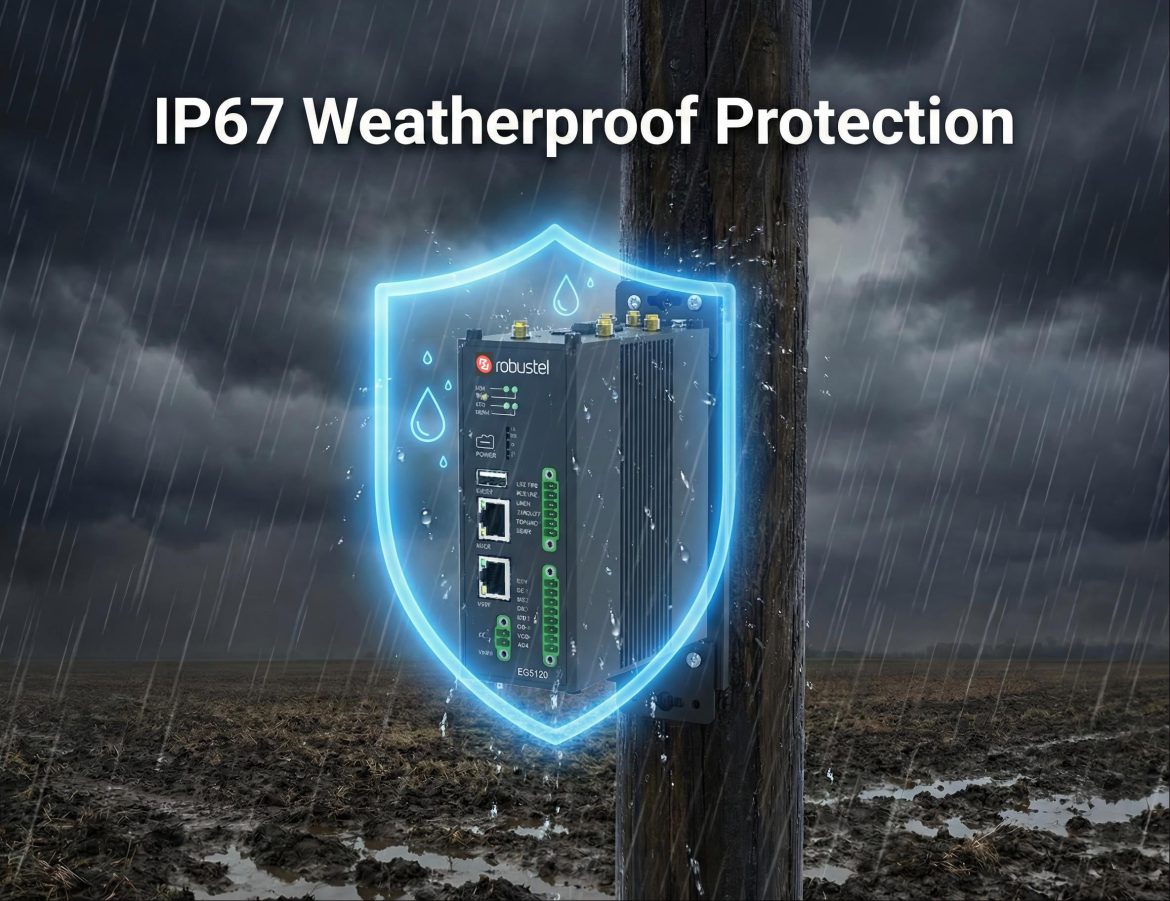
Out in the middle of a cornfield in July, the temperature inside a metal enclosure can hit 140°F. Dust is everywhere. Then comes the rain — torrential, unrelenting. And somewhere in that chaos, a tiny computer is supposed to keep sending soil moisture readings back to the farm office. That’s the reality of agricultural field monitoring. It’s not a clean lab. It’s a battleground.
This is where ruggedized single-board computers, or SBCs, earn their keep. Unlike the dainty Raspberry Pi sitting on your desk, these boards are built to take a beating. And honestly, the agricultural tech world is waking up to just how much they matter.
Why Standard SBCs Struggle in the Field
Let’s be clear — a regular single-board computer is a marvel. Cheap, capable, and flexible. But drop one into a remote field monitoring station and things go sideways fast. Vibration from tractors, temperature swings from freezing nights to scorching afternoons, humidity that seeps into every crevice… it’s a lot.
Standard boards often lack:
- Wide-temperature components (most quit below -20°C or above 60°C)
- Conformal coating to resist moisture and dust
- Shock-mounted connectors that don’t rattle loose
- Industrial-grade power regulation for unstable solar or battery inputs
In fact, a lot of early agtech prototypes failed not because the software was bad, but because the hardware just couldn’t survive a season. That’s a painful lesson for any startup.
What Makes an SBC “Ruggedized” Anyway?
Ruggedized doesn’t mean indestructible. It means designed for harsh conditions from the ground up. Think of it like the difference between a sedan and a pickup truck — both get you to town, but only one handles a muddy backroad without whining.
Key traits include:
- Extended temperature range — typically -40°C to +85°C
- Fanless thermal design — no moving parts to clog with dust
- Locking connectors — so cables don’t wiggle free
- Surge and ESD protection — lightning happens, you know
- Long-term availability — a five-year supply guarantee matters when you’re deploying thousands of units
Sure, these boards cost more. But replacing a $50 board three times a year in a remote location costs way more than buying a $200 board once.
Real-World Applications in Field Monitoring
So where are these boards actually being used? Everywhere from vineyards in California to soybean fields in Brazil. Let’s break down a few common setups.
Soil and Crop Sensors
Ruggedized SBCs collect data from soil moisture probes, temperature sensors, and NPK (nitrogen, phosphorus, potassium) meters. They process readings locally — edge computing, if you want the buzzword — and send only the important stuff over LoRaWAN or cellular. That saves power and bandwidth.
Weather Stations
You’ve seen those little weather stations on poles. The smart ones have an SBC inside handling wind speed, rainfall, humidity, and solar radiation. A rugged board keeps logging even when hail is pounding the enclosure.
Livestock Tracking and Health
Okay, this one’s a bit different. Here the SBC might sit on a gate or a feeding station, reading RFID tags and monitoring water trough levels. Dust and mud are the enemies. A sealed, fanless board just shrugs it off.
Choosing the Right Board: A Quick Comparison
Not all ruggedized SBCs are created equal. Here’s a rough look at what’s out there. (Prices are ballpark, because, well, supply chains.)
| Board Type | Temp Range | Typical Use | Price Range |
|---|---|---|---|
| Standard Raspberry Pi | 0°C to 50°C | Prototyping only | $35–$75 |
| Industrial SBC (e.g., BeagleBone Industrial) | -40°C to 85°C | Sensor hubs | $100–$200 |
| Ruggedized ARM SBC with enclosure | -40°C to 85°C | Remote weather stations | $200–$400 |
| Custom carrier board + SOM | Varies (often -40°C to 85°C) | High-volume deployments | $150–$500+ |
That said, the sweet spot for most farm pilots is the $150–$250 range. You get solid protection without going full aerospace-grade.
The Power Problem (and How Rugged SBCs Solve It)
Here’s a pain point nobody talks about enough: power. Fields don’t have outlets. You’re running on solar, battery, or both. A standard SBC might guzzle 5 watts and brown out when a cloud passes over. A ruggedized board often idles under 1 watt and handles voltage sags without rebooting.
Some even have built-in MPPT (maximum power point tracking) controllers. That’s a fancy way of saying they squeeze every drop from your solar panel. In fact, for remote monitoring, power efficiency is just as important as physical toughness.
Connectivity: The Weak Link
You can have the toughest board on earth, but if it can’t send data, it’s a paperweight. Rural connectivity is… well, let’s just say it’s improving. Slowly.
Rugged SBCs typically support:
- LoRaWAN (long range, low power — great for sensor networks)
- NB-IoT and LTE-M (cellular for wider coverage)
- Wi-Fi HaLow (newer, longer range than standard Wi-Fi)
- Satellite backhaul (expensive but works anywhere)
The trick is having a board with multiple options. Because what works on one farm might be useless on the next. And you don’t want to swap hardware every time you cross a county line.
Installation and Maintenance Realities
Let’s be honest — nobody wants to drive two hours to reboot a frozen computer. Ruggedized SBCs help here with watchdog timers (auto-restart on lockup) and remote management tools. But installation still matters.
A few hard-won tips:
- Mount enclosures with a slight downward angle so water runs off
- Use drip loops on cables — water follows gravity, not your hopes
- Add desiccant packs inside the enclosure to fight condensation
- Label every port. Future you will be grateful.
And sure, you could skip all this. But then you’ll be the person explaining to your boss why the irrigation system flooded a field because a $2 connector corroded.
The Bottom Line for Growers and Agtech Builders
Ruggedized single-board computers aren’t glamorous. They don’t get keynote speeches. But they’re the unsung heroes of modern agriculture — quietly logging data through heatwaves, storms, and dust clouds that would kill a consumer-grade device in a week.
If you’re building field monitoring systems, don’t cheap out on the brain. Choose a board that’s rated for the environment, not just the lab. Your future self — the one not driving out to replace hardware — will thank you.
And maybe, just maybe, that little board will outlast the fence post next to it. Stranger things have happened.