
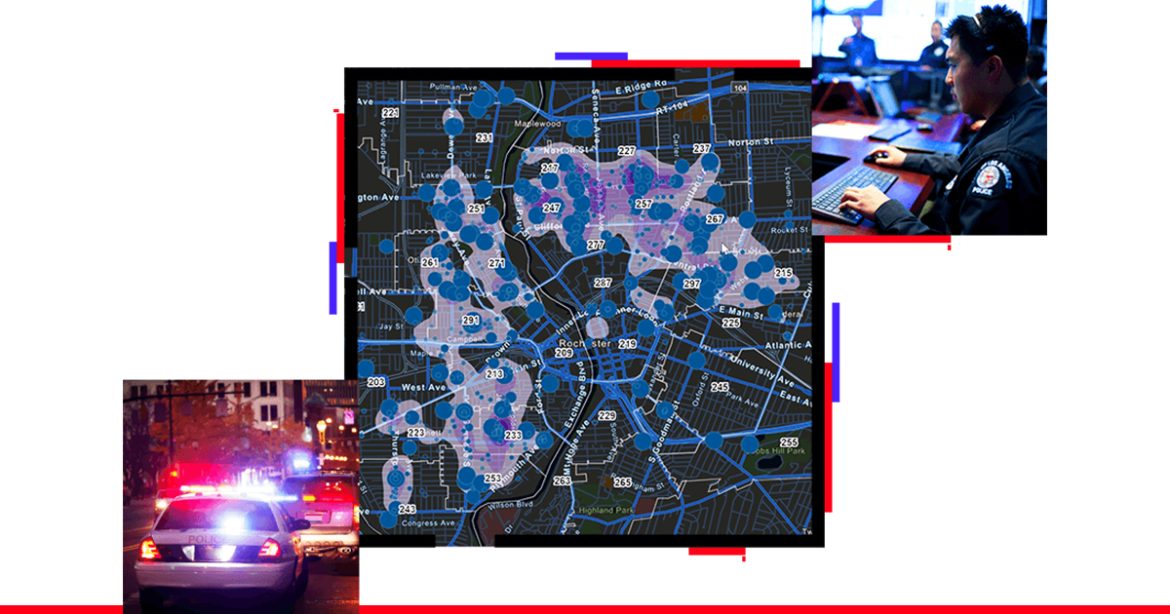
Picture this: a patrol car rolls down a quiet street. The officer inside isn’t responding to a call. They’re following a hunch — well, not a hunch exactly. A computer somewhere flagged this block as a likely spot for a break-in tonight. No crime has happened yet. But the algorithm says it probably will.
That’s predictive policing in a nutshell. And honestly, it sounds like something straight out of Minority Report. Except it’s real, it’s already in use in dozens of cities, and it raises some uncomfortable questions about fairness, privacy, and good old-fashioned policing.
Let’s dive in. Because this isn’t just a tech story. It’s a story about power, bias, and who gets watched when nobody’s looking.
What Exactly Is Predictive Policing?
Predictive policing uses data — crime reports, arrest records, even things like weather or payday cycles — to forecast where crimes might occur or who might commit them. There are two main flavors:
- Place-based: Predicts where crime is likely. Think heat maps that update daily.
- Person-based: Predicts who might be involved. This one gets ethically dicey fast.
Software like PredPol (now Geolitica) and ShotSpotter’s analytics have been deployed in Los Angeles, Chicago, New Orleans, and plenty of smaller towns. The pitch is simple: do more with less. Departments are stretched thin. Why not let math point the way?
Sure, that logic has appeal. But here’s the deal — algorithms don’t see the world fresh. They see the world as it’s been recorded. And that record is… messy.
The Bias Problem Nobody Can Wave Away
Imagine teaching a kid to bake by only showing them burnt cookies. They’ll think burnt is normal. Predictive policing models often learn from historical arrest data. And historical arrest data reflects decades of over-policing in Black and brown neighborhoods.
So the algorithm doesn’t invent bias. It amplifies it. A 2016 investigation by ProPublica found that a widely used recidivism algorithm was twice as likely to falsely flag Black defendants as high risk compared to white defendants. That’s not a glitch. That’s a feature of the data.
In fact, a 2023 study in Nature Human Behaviour showed that predictive policing in Los Angeles led to more stops of Black and Hispanic residents — even when crime rates were controlled for. The model was essentially creating a feedback loop: send more cops to a neighborhood, find more minor offenses, log them as data, send even more cops next week.
Key takeaway: If the input is biased, the output will be biased. And unlike a human officer who might second-guess a hunch, an algorithm rarely does.
Transparency: The Black Box in the Patrol Car
Here’s a question: if you’re flagged as a likely offender, can you see why? Usually, no. Most predictive policing vendors treat their algorithms as trade secrets. Defendants in criminal cases have tried to challenge the software — and courts have often sided with the police, saying the code isn’t relevant to guilt or innocence.
That’s a problem. Because “the computer said so” isn’t a legal standard. It’s a magic trick. And you can’t cross-examine a magic trick.
Some cities have pushed back. In 2019, Santa Cruz, California, became the first U.S. city to ban predictive policing outright. Others, like Oakland, have required public audits. But enforcement is patchy. And vendors keep tweaking their models, which makes oversight feel like chasing a moving train.
Does It Even Work? The Evidence Is… Mixed
You’d think a tool this controversial would have a mountain of proof behind it. Well, not exactly.
A 2022 systematic review in Justice Quarterly looked at dozens of studies. The verdict? Predictive policing can reduce crime in some places, but the effect is modest — and often fades after a few months. Meanwhile, the collateral costs (community trust, civil liberties, over-policing) are real and lasting.
There’s also the issue of “prediction drift.” A model trained on 2015 data might be useless by 2025. Neighborhoods change. Crime patterns shift. But retraining the model takes time, money, and expertise that many local departments simply don’t have.
So we’re left with a tool that’s expensive, opaque, and only sometimes effective. That’s not a great sales pitch.
The Ethical Tightrope: Safety vs. Civil Liberties
Let’s be fair. Police departments face real pressure. Violent crime spikes in some cities. Budgets shrink. Politicians demand results. Predictive policing offers a shiny, data-driven answer. And who doesn’t love data?
But ethics isn’t about what’s easy. It’s about what’s right. And there are at least three ethical red flags here:
- Presumption of innocence: Person-based predictions treat people as suspects before any crime occurs. That flips our legal system on its head.
- Disparate impact: Even if a model isn’t intentionally racist, its outcomes can be. And under civil rights law, impact matters as much as intent.
- Lack of consent: You can’t opt out of being in a police database. Your address, your associates, your past — all fair game.
Now, some argue that predictive policing is just a smarter version of what cops already do. Officers have always used intuition and experience. Why not add math?
Fair point. But intuition can be challenged in court. A hunch can be questioned. An algorithm wrapped in intellectual property law? Good luck.
What Would Ethical Predictive Policing Look Like?
I’m not saying we should toss every algorithm in the trash. That’s not realistic. But if we’re going to use them, let’s use them with guardrails. Here’s what that might look like:
| Principle | What It Means in Practice |
|---|---|
| Transparency | Open-source the code or at least allow independent audits. |
| Contestability | Anyone flagged should have a right to know and challenge it. |
| Data hygiene | Regularly purge biased or stale data. Don’t train on arrest records alone. |
| Human review | No automated action without a human officer’s judgment. |
| Community input | Residents get a say in how these tools are deployed in their neighborhoods. |
That’s not perfect. But it’s a start. And honestly, it’s more than most departments have right now.
The Human Cost of Being a Data Point
Let’s zoom out for a second. Behind every prediction is a person. A teenager walking to school who gets stopped because his zip code is “hot.” A mother whose house is visited three times in a month because an algorithm flagged her ex-boyfriend’s associates. These aren’t hypotheticals. They’re documented in lawsuits and journalism across the country.
And that erodes something you can’t measure in a crime stat: trust. When people feel watched for no reason, they stop calling the police when they actually need help. They stop cooperating with investigations. The neighborhood becomes a surveillance zone, not a community.
You know what’s ironic? That makes everyone less safe in the long run.
Where Do We Go From Here?
Predictive policing isn’t going away. The tech is too tempting, the budgets too tight. But we can demand better. We can ask hard questions at city council meetings. We can support laws that require impact audits. We can push for community-led alternatives — like violence interrupters and mental health responders — that address root causes instead of just mapping symptoms.
At the end of the day, an algorithm is just a mirror. It reflects what we feed it. If we feed it decades of biased policing, we shouldn’t be surprised when it spits out more of the same. The question isn’t whether the math is neutral. It’s whether we’re brave enough to admit it never was.
So next time you hear about a “smart” policing tool, ask yourself: smart for whom? And at whose expense? That’s not a technical question. It’s a moral one. And no line of code can answer it for us.