There’s a quiet irony brewing in the world of tech. We’re building these massive, brilliant digital brains — large language models (LLMs) like the one you might be using right now — and they’re hungry. Not for data, though that’s part of it. They’re hungry for electricity. And as we push these models to be smarter, faster, and more human-like, the question isn’t just about performance anymore. It’s about the grid. Specifically, what happens when you plug a digital behemoth into a renewable energy system that’s trying its best to stay green?
The Unseen Appetite of AI Training
Let’s be honest. When we think about AI’s carbon footprint, most of us picture a data center humming in a desert, powered by coal. That’s the old story. The new story is more complex, and frankly, more interesting. Training a frontier-level LLM isn’t like running a few servers. It’s like building a city from scratch, then demolishing it, then rebuilding it slightly differently—thousands of times over. Each forward pass and backpropagation step is a tiny calculation, but multiply that by trillions of parameters and billions of tokens, and you’re looking at a power draw that can rival a small town.
Recent estimates suggest that training a single large model like GPT-3 consumed around 1,300 megawatt-hours of electricity. That’s roughly the annual consumption of 130 average American homes. And that was a few years ago. The models we’re building now are bigger, and the training runs are longer. We’re not just talking about a surge; we’re talking about a consistent, heavy draw.
The Renewable Grid’s Dirty Little Secret
Here’s the deal with renewable energy: it’s fickle. Solar panels don’t work at night. Wind turbines stall when the air is still. And while we have battery storage, it’s not yet at the scale where we can bank a sunny Tuesday afternoon for a stormy Thursday evening. So, when you have a massive AI training job that runs 24/7 for months, you can’t just rely on the sun.
What happens then? The grid manager has to balance supply and demand in real-time. If your AI model is pulling max power at 2 AM on a windless night, the grid doesn’t care about your green intentions. It needs to keep the lights on. So, it fires up natural gas peaker plants — the dirty, inefficient cousins of the energy world. The result? Your “carbon-neutral” AI might actually be running on fossil fuels for a significant chunk of its training cycle. It’s a bit like buying an electric car but only charging it from a diesel generator in your backyard. Sure, the car is clean. The process isn’t.
The Timing Problem Nobody Talks About
Most AI training jobs are not flexible. You don’t pause a 90-day training run because the wind died down. That would corrupt the model or, at the very least, cost you millions in idle time. So, the demand is rigid. And rigid demand is the enemy of renewable integration. We need to think about this differently. Instead of asking “How much energy does AI use?”, we should ask “When does AI use energy, and can that timing be shifted?”
I’ve seen some interesting experiments with “carbon-aware computing.” Google, for instance, has tried shifting some of its non-urgent workloads to times when the grid is cleanest. But training a foundational model isn’t like sending a batch email. It’s a continuous, synchronous process. You can’t just pause it for three hours and resume later without severe consequences. That’s the technical hurdle we’re stuck on.
The Water and Hardware Angle
Wait, it’s not just about electrons. Training these models generates heat. Lots of it. And how do we cool down those racks of GPUs? Usually with water. A mid-sized data center can use hundreds of thousands of gallons of water per day for evaporative cooling. Now, put that data center in a region already stressed for water — like parts of California or Arizona — and you’ve got a new conflict. It’s not just about the grid; it’s about the watershed.
And then there’s the hardware lifecycle. GPUs don’t last forever. They’re stressed to the max during training, and they fail. Those dead chips contain precious metals and rare earth elements. Mining those materials is energy-intensive, often done in regions with lax environmental standards. So, even if your training grid is 100% renewable, you’re still inheriting a carbon debt from the manufacturing side. It’s a full-circle problem.
Can We Actually Make This Work? A Pragmatic Look
Alright, let’s not doom-and-gloom this into the ground. There are paths forward, but they require a shift in mindset. Here’s what I think needs to happen, and some of it is already underway.
1. Location, Location, Location
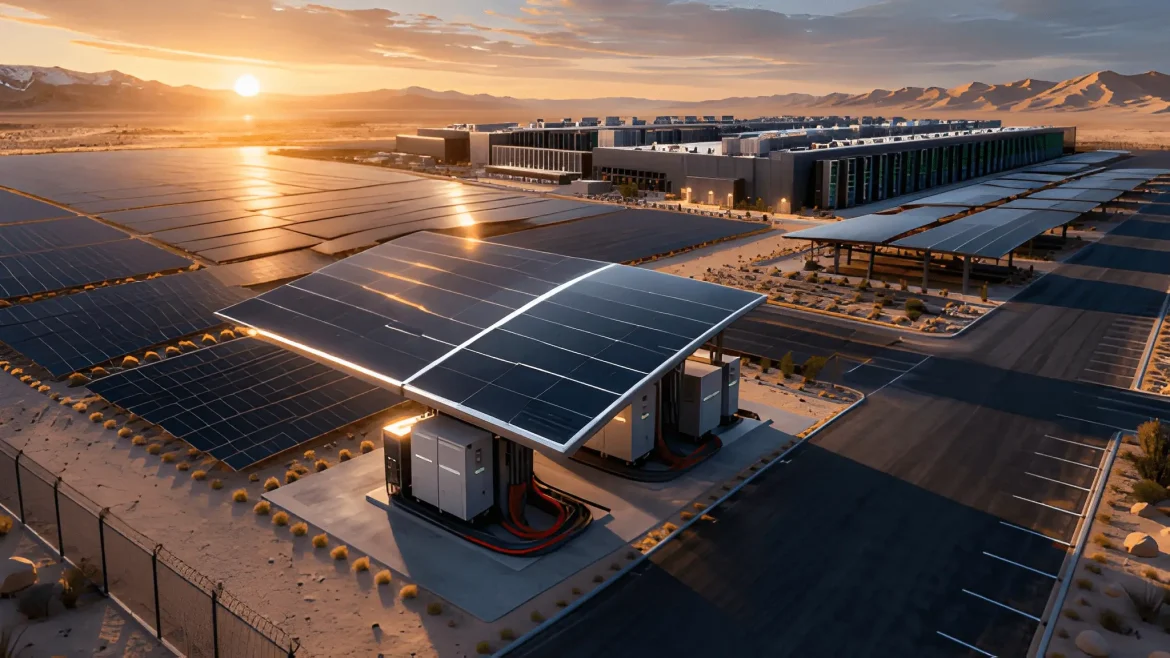
We need to build AI data centers where renewable energy is abundant and curtailable. Places like Iceland (geothermal), parts of Texas (wind), or the Pacific Northwest (hydro) make sense. But that’s not enough. We need to co-locate with massive battery storage. Not just for backup, but for daily load-shifting. If a data center can run on stored solar from noon to midnight, that’s a game-changer.
2. Rethinking the Training Process
This is where it gets technical, but bear with me. Some researchers are exploring “elastic training.” That’s where the model can dynamically scale down its compute when energy is dirty, then scale up when it’s clean. It’s like a car that can run on 4 cylinders in traffic and 8 on the highway. It’s not perfect, and it requires new optimization algorithms, but the potential is huge. Early studies suggest we could cut the carbon footprint of training by up to 40% just by being flexible with our compute.
3. Efficiency Over Size
Honestly, we’re in an arms race for model size that feels a bit like the old muscle car era. Bigger isn’t always better. Sparse models, mixture-of-experts architectures, and better quantization techniques can deliver similar performance with a fraction of the energy. We need to start rewarding efficiency in AI research, not just benchmark scores. It’s like measuring a car by its miles-per-gallon, not just its top speed.
What the Data Says (A Quick Snapshot)
To give you a clearer picture, let’s look at some rough numbers. These aren’t exact, but they’re grounded in recent industry reports.
| Factor | Estimated Impact | Notes |
|---|---|---|
| Training energy (GPT-3 class) | ~1,300 MWh | Equivalent to ~130 homes for a year |
| Carbon intensity of average US grid | ~0.4 kg CO2/kWh | Varies wildly by region and time of day |
| Potential reduction via carbon-aware scheduling | 30-45% | Only if training can be paused or slowed |
| Water usage for cooling (mid-size DC) | ~1-2 million gallons/day | Often exceeds local municipal usage |
See that line about carbon-aware scheduling? That’s the low-hanging fruit. But it requires a fundamental change in how we treat training jobs. They can’t be “fire and forget” anymore. They need to be aware of the grid’s heartbeat.
The Role of Policy and Grid Modernization
You can’t talk about this without mentioning the grid itself. Our electrical infrastructure in many places is ancient. It was designed for predictable, base-load power. Renewables are variable, and AI is spiky. The grid needs to become smarter, with better real-time pricing signals. If electricity costs 10 cents per kWh at 2 PM but 50 cents at 7 PM (because of peak demand), then AI companies will naturally shift their training schedules. But that only works if the pricing is transparent and dynamic.
Some utilities are already experimenting with this. They’re offering “green tariffs” to large tech companies, allowing them to pay a premium for renewable energy that’s generated specifically for their data centers. That’s a start. But it doesn’t solve the timing mismatch. You can buy green energy credits, but that doesn’t mean the electrons flowing into your server right now are clean. It’s a bookkeeping trick, not a physics trick.
So, What’s the Verdict?
Here’s the thing — I’m not saying we should stop training large language models. The benefits are immense. They’re helping doctors diagnose rare diseases, translating languages in real-time, and even writing code that helps us build better renewable energy systems. There’s a beautiful symmetry there. But we can’t ignore the physical reality.
Training a large model on a renewable grid isn’t inherently clean. It’s only clean if the grid is flexible enough to handle the load without falling back on fossil fuels. And that flexibility isn’t just a technical problem; it’s an economic and regulatory one. We need to incentivize energy storage, encourage grid operators to prioritize renewable sources for high-value computing tasks, and push AI researchers to value efficiency as much as accuracy.
Think of it like this: you wouldn’t buy a high-performance sports car if you only had a dirt road to drive on. You’d either build a better road or buy a different car. We’re in that exact moment with AI and energy. The dirt road is our outdated grid. The sports car is the LLM. We have two choices: pave the road with modern storage and smart grids, or design a car that runs on less fuel. The smartest path is probably both.
And that’s not a doom-and-gloom prediction. It’s actually a call to action. The next decade will define whether AI becomes a net positive for the climate or just another strain on it. The tools are in our hands — the algorithms, the batteries, the policy levers. The question is whether we have the will to use them wisely, or if we’ll just let the models get bigger and hope the sun shines brighter.
Well, the sun won’t shine brighter on demand. But we can build smarter systems around it. That’s the real challenge — and the real opportunity.