You know that feeling. You spend years building a community, sharing your art, your thoughts, your life. Then, one day, an algorithm change buries your content. Or a policy shift locks you out. Poof. Your digital home—the connections, the memories—feels like it’s on rented land.
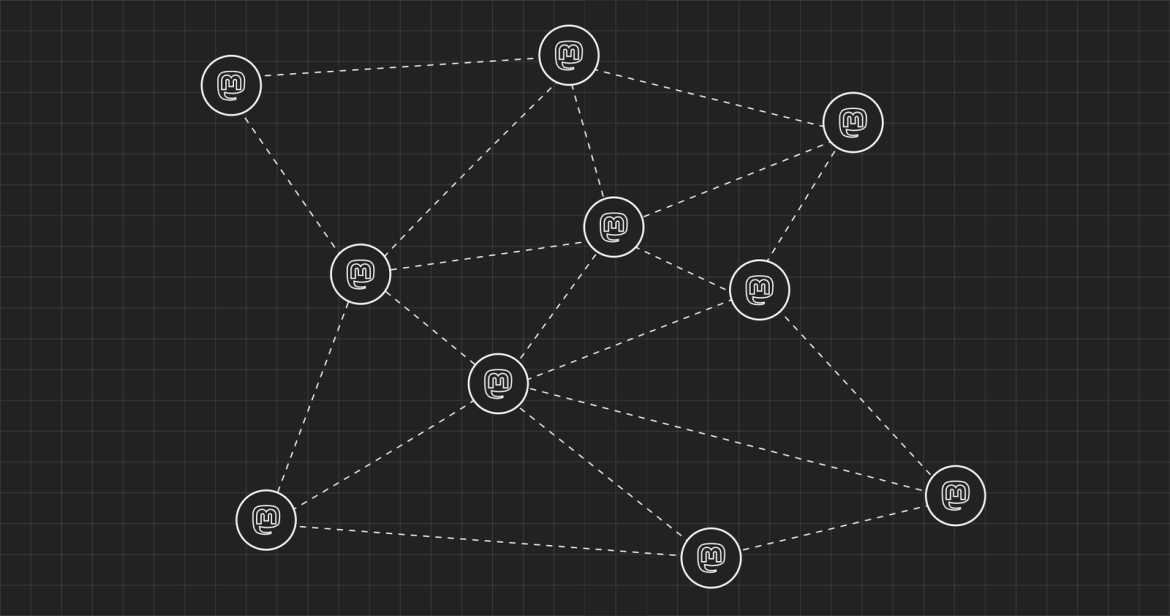
That centralized control is cracking. A new wave is building, not around flashy new apps, but around foundational decentralized social media protocols. Think of it less like moving from Facebook to a new Facebook, and more like replacing the entire concept of a company-owned town with a set of open, communal rules for how people connect. And at its heart? A radical idea: true data ownership.
Breaking Down the Jargon: Protocols, Not Platforms
Let’s simplify. A protocol is a set of rules for communication. Email (SMTP) is a protocol. You can use Gmail, Outlook, or ProtonMail, and still email anyone. The protocol is open; the clients (apps) compete.
Today’s social media? It’s a walled garden. Facebook’s rules, Facebook’s data, Facebook’s server. Decentralized social protocols flip this. They establish open-source rules for social networking—how to post, follow, and share—that anyone can use to build an app, or a “server” (often called a node).
The big names here are ActivityPub (the protocol behind Mastodon and the fediverse) and, to a growing extent, protocols like Bluesky’s AT Protocol. They create an interconnected web of social experiences, not a single, monolithic platform.
The Core Shift: From Tenant to Homeowner
This architectural shift changes everything about user data ownership. Here’s the messy, human difference.
| Centralized Model (The Old Way) | Decentralized Protocol Model (The New Way) |
| Your data lives on a company’s server. It’s their asset. | Your data can live on a server you choose, or even your own device. |
| You agree to a terms-of-service contract you never read. | You operate under the open protocol rules; server hosts may have additional guidelines. |
| Algorithmic feeds optimize for your attention (and ad revenue). | Feeds are often chronological or curated by the app builder—more transparency. |
| Banished by the platform? You lose your identity and network. | Suspended from one server? You can migrate your identity and followers to another. |
It’s the difference between renting an apartment where the landlord can suddenly change the locks, and owning a modular home you can hitch and move to a new community if you like. Your social graph—your followers and who you follow—can potentially move with you. That’s powerful.
Why Now? The Perfect Storm of Discontent
This isn’t just tech for tech’s sake. The rise of decentralized social networks is fueled by real, widespread pain points:
- Algorithmic Anxiety: That nagging sense that you’re seeing only what a machine thinks will “engage” you, not what matters from your actual community.
- Creator Exploitation: Building an audience on someone else’s land means they can change the rent (take a bigger cut of ad revenue, demote your posts) anytime.
- Privacy Erosion: Data breaches, invasive tracking, and the creepy feeling that your every click is a data point in a shadow profile.
- Capricious Moderation: Whether you feel content moderation is too heavy-handed or too lax, centralized control puts immense, often inconsistent, power in one entity’s hands.
People are tired of being the product. They want to be citizens.
The Trade-Offs: It’s Not All Sunshine (Yet)
Honestly, the current experience can be… clunky. To achieve data sovereignty, you accept some friction. The onboarding is confusing—picking a server? What’s that mean? The network effects are smaller. You might miss that friend who’s still glued to Instagram.
And moderation in a decentralized social media landscape is a complex, unsolved puzzle. It moves from a top-down policy to a community-led effort, which can be both more nuanced and more chaotic. It’s like moving from a single, powerful sheriff to a neighborhood watch—it has strengths, but requires more participation and can be messy.
The Future Built on Protocols: What Could Emerge?
This is where it gets exciting. Open protocols become a foundation for innovation you simply can’t get in a walled garden.
- Interoperable Identities: Imagine using a single, user-owned profile to comment on a blog, post on a microblogging app, and share in a video community—all seamlessly. No more “Sign in with Facebook.”
- Portable Reputation: Your community standing, your tipping history, your credentials could travel with you across the fediverse, owned by you.
- Novel Business Models: Creators could have direct, protocol-enabled relationships with subscribers, bypassing platform cuts entirely. Micropayments for boosts, not ads, could flourish.
- Niche Communities That Thrive: A forestry research network, a local poetry group—they can set up their own server with tailored rules, knowing they can still connect to the wider world.
The protocol is the rail system. The trains—the apps, the experiences—can be built by anyone. That breeds competition on user experience, not just on locking in your data.
A Quiet Revolution, Not a Loud Takeover
Look, the big platforms aren’t disappearing tomorrow. But the genie is out of the bottle. The demand for user-controlled data is no longer a niche crypto-libertarian dream. It’s entering the mainstream conversation, driven by fatigue with the status quo.
The rise of decentralized social media protocols offers a different path. It’s a shift back towards the original, quirky, human-scale promise of the internet: a network of networks, where you have agency. Where your digital self isn’t just an asset on a balance sheet, but an extension of your actual self—with all the rights, responsibilities, and complexities that entails.
It asks a fundamental question: in our connected lives, what does it truly mean to own your space, your voice, your connections? The answer is being built, block by open block, protocol by protocol.