Let’s be honest. Remote work solved some huge problems, but it created a few new ones, didn’t it? One of the stickiest is how to build genuine connections across generations when your “water cooler” is a Slack channel and your “office” is a 15-inch screen.
You’ve got Baby Boomers with decades of institutional knowledge, Gen Xers who remember fax machines but adapted to Zoom, Millennials who are digital natives but crave purpose, and Gen Z who… well, who communicate in memes and expect digital fluency. Getting them to network effectively—to share ideas, mentor, and collaborate—feels like a monumental task.
But here’s the deal: it’s not about forcing everyone onto the same platform. It’s about creating a culture of intentional, inclusive connection. Let’s dive into some practical cross-generational networking strategies for remote teams that actually work.
Why Traditional Networking Fails in a Remote, Multi-Generational Setting
First, we need to understand the gap. In an office, networking happened organically—grabbing coffee, overhearing a conversation, popping by a desk. Remote work strips that away. What’s left often defaults to the loudest voice or the most comfortable technology, which can alienate entire groups.
Think of it like this: if your only networking strategy is a weekly happy hour on a video call, you’re essentially hosting a party in a room that some find awkward, others find draining, and a few might not even know how to enter. You need multiple doors into the conversation.
Core Strategies to Foster Meaningful Connections
1. Diversify Your Communication Toolkit (It’s Not All Video)
Mandatory video calls can be a source of anxiety, or “Zoom fatigue,” for many—and this doesn’t split neatly along age lines. A robust cross-generational communication strategy uses the right tool for the right purpose.
| Tool/Format | Best For | Generational Consideration |
| Synchronous Video (Zoom, Teams) | Brainstorming, sensitive conversations, building rapport. | Offer camera-optional policies. Not everyone’s home setup is video-ready. |
| Asynchronous Video (Loom, Vimeo) | Project updates, detailed feedback, tutorials. | Great for sharing knowledge without scheduling. Less pressure than live. |
| Instant Messaging (Slack, Teams Chat) | Quick questions, informal bonding, sharing links/memes. | Create clear channel guidelines. What’s urgent? What’s for fun? Avoid after-hours pings. |
| Old-School Email | Formal decisions, detailed briefs, asynchronous deep dives. | Still a preferred and reliable method for many. Don’t declare it dead. |
| Voice Notes / Calls | Quick clarifications, adding tone without video, accessibility. | A hugely underrated tool. Faster than typing, less intense than video. |
2. Create Structured, Low-Pressure Networking Rituals
Spontaneity is hard remotely. So you have to engineer it. The key is to make these events opt-in, varied, and with a clear, comfortable structure.
- “Virtual Coffee” with a Twist: Use a bot like Donut on Slack to randomly pair team members. But provide conversation starters! Instead of “how’s the weather?” try “What’s a project you’re proud of that no one knows about?” or “What’s the best career advice you ever received, or wish you had?”
- Skill-Sharing “Lightning Talks”: Host a monthly 30-minute session where two team members from different generations share something for 10 minutes each. Topics can range from “Excel power shortcuts” (from a Boomer/Gen Xer) to “Content creation on Canva” (from a Millennial/Gen Z). It flips the traditional mentorship model and values everyone’s expertise.
- Interest-Based Channels or Groups: Create spaces around hobbies, not work. #gardening, #movie-buffs, #pet-corner. Shared interests are the ultimate generational equalizer. You’d be surprised the connections formed over a shared love of 80s rock or sourdough baking.
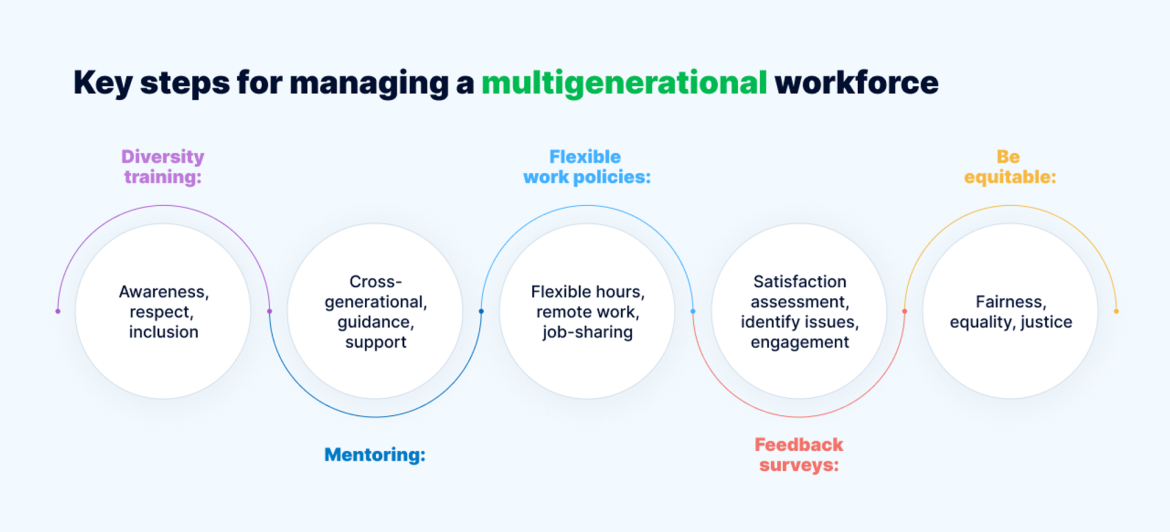
3. Implement Reverse and Multi-Directional Mentorship
This is arguably the most powerful strategy for cross-generational networking. Ditch the top-down only model.
- Formalize Reverse Mentorship: Pair younger employees with senior leaders to tutor them on digital trends, new social platforms, or emerging tech tools. This gives younger workers visibility and agency, while leaders stay current.
- Create “Project-Based” Mentorship: Instead of a long-term, vague commitment, set up short-term mentorship pairings for specific goals. A Gen Z employee mentors a Gen X on TikTok trends for a campaign. A Boomer mentors a Millennial on client negotiation tactics for an upcoming deal.
The Human Element: Fostering Psychological Safety Across Ages
All the tools and programs in the world fail without trust. You know? Different generations have different comfort levels with vulnerability at work. Building a psychologically safe environment is non-negotiable.
Leaders must model this. A senior leader admitting, “I don’t understand this new tool, can someone help me?” is incredibly powerful. It gives everyone permission to be learners, not just experts.
Celebrate different communication styles. That lengthy, thoughtful email from a veteran employee holds as much value as the concise, bullet-pointed Slack update from a newer hire. Call out the value in both.
Practical Tips to Roll Out Tomorrow
Okay, so this all sounds good, but where do you start? Don’t boil the ocean. Pick one thing.
- Audit Your Current Tools: Survey your team—anonymously—about what communication tools they love, tolerate, and dread. You might find your assumptions are wrong.
- Launch One Ritual: Start a monthly “Learning Lunch” via video where attendance is optional and the topic is pre-shared. Keep it to 25 minutes.
- Highlight Connection Success Stories: When a cross-generational pair collaborates well, share it (with permission). “Big shoutout to Sarah and Mark for combining deep client insight with killer presentation design on that project!” This reinforces the behavior.
- Default to Documentation: Make sharing knowledge a habit. Encourage everyone to document processes in a shared wiki. This turns individual knowledge (often held by older generations) into team capital, and it’s a natural way for younger, digitally-savvy workers to contribute.
The Bottom Line: It’s About Intentionality, Not Nostalgia
We can’t—and shouldn’t try to—recreate the 1990s office online. The goal isn’t to make remote work feel exactly like in-person work. The goal is to leverage the unique opportunities of a remote, age-diverse team.
Honestly, when you get it right, you create something stronger than what existed before. You get a team where a 25-year-old can teach a 55-year-old about AI prompts, and in return, learns how to navigate a complex organizational change. That’s a resilient team. That’s a competitive advantage.
The future of work isn’t about where we sit, but how we connect. And the most innovative connections often happen between people who see the world from entirely different vantage points. Your job is simply to build the bridges—or maybe, just provide the blueprint and let them build it together.